In early 2026, our team inherited a half-built prototype and a brief that had more ambition than direction. Four months later, we shipped Wildlight — a RAG-powered AI web app that turns private yards into connected pollinator habitats.
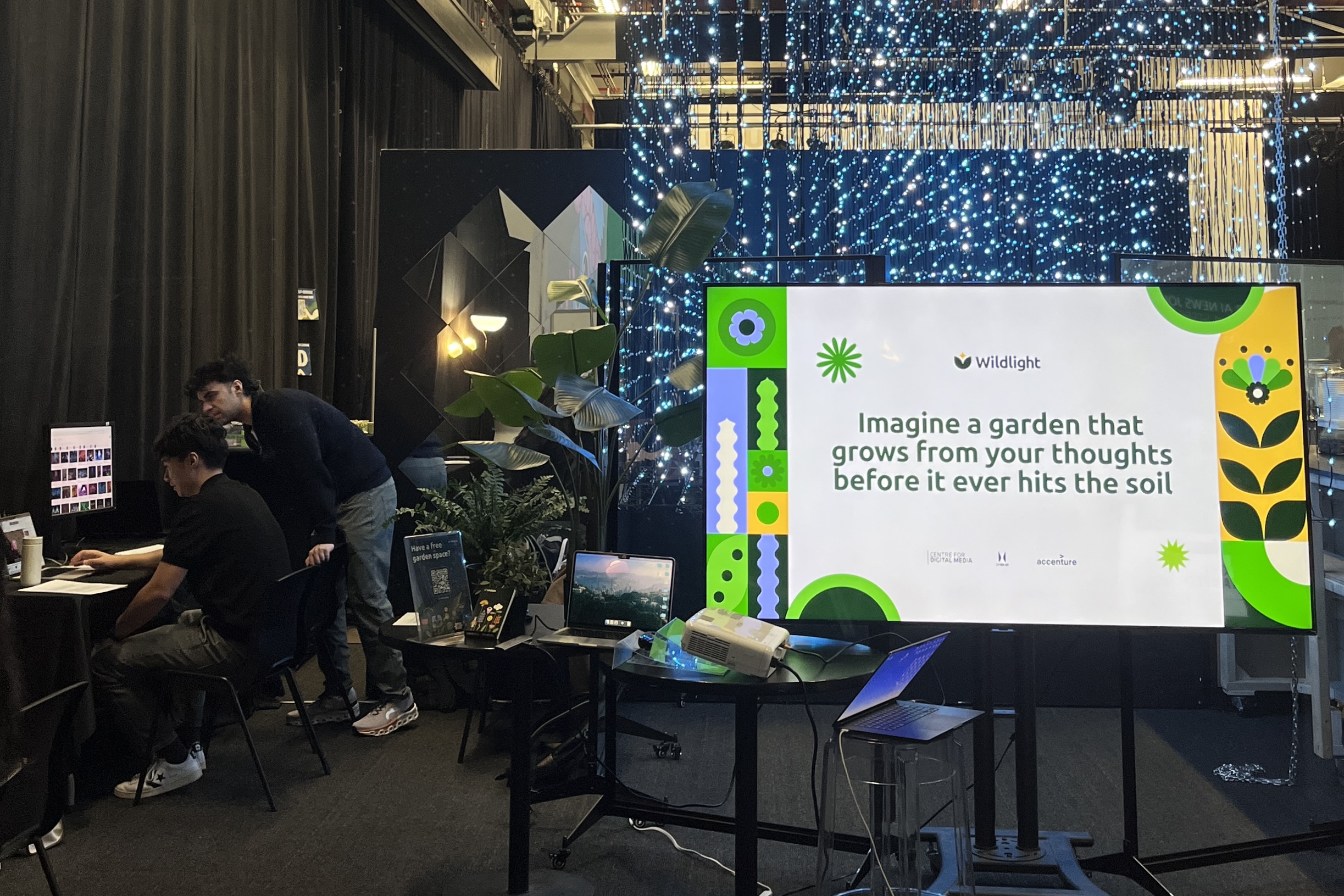
Wildlight soft-launched in April 2026, and it was showcased at Web Summit Vancouver in May 2026. It's now live here.
Problem
Many gardeners are actively trying to support local biodiversity by converting lawns, seeking out native plants, and making space for pollinators. The interest is growing. What isn't keeping up is accessible, tailored guidance.
Native pollinator gardening requires site-specific expertise: which species suit your soil, your sun, your region. Generic resources fail to answer these questions, and localized ecological expertise is hard to access. As a result, most people give up before a single plant goes in the ground.
Accenture had already recognized this gap and started building toward it. When we picked it up, we discovered more.
Decision 01
Cutting Scope to Ship
The inherited prototype had features spread across too many directions with no clear north star. Before deciding what to build, we needed to understand what was worth building:
User Research
Interviewed gardeners across experience levels and synthesized recurring blockers.
Technical Feasibility
Evaluated AI recommendation approaches and RAG as a grounding mechanism.
Scope Prioritization
Prioritized the product requirements to define a MVP baseline for launch.
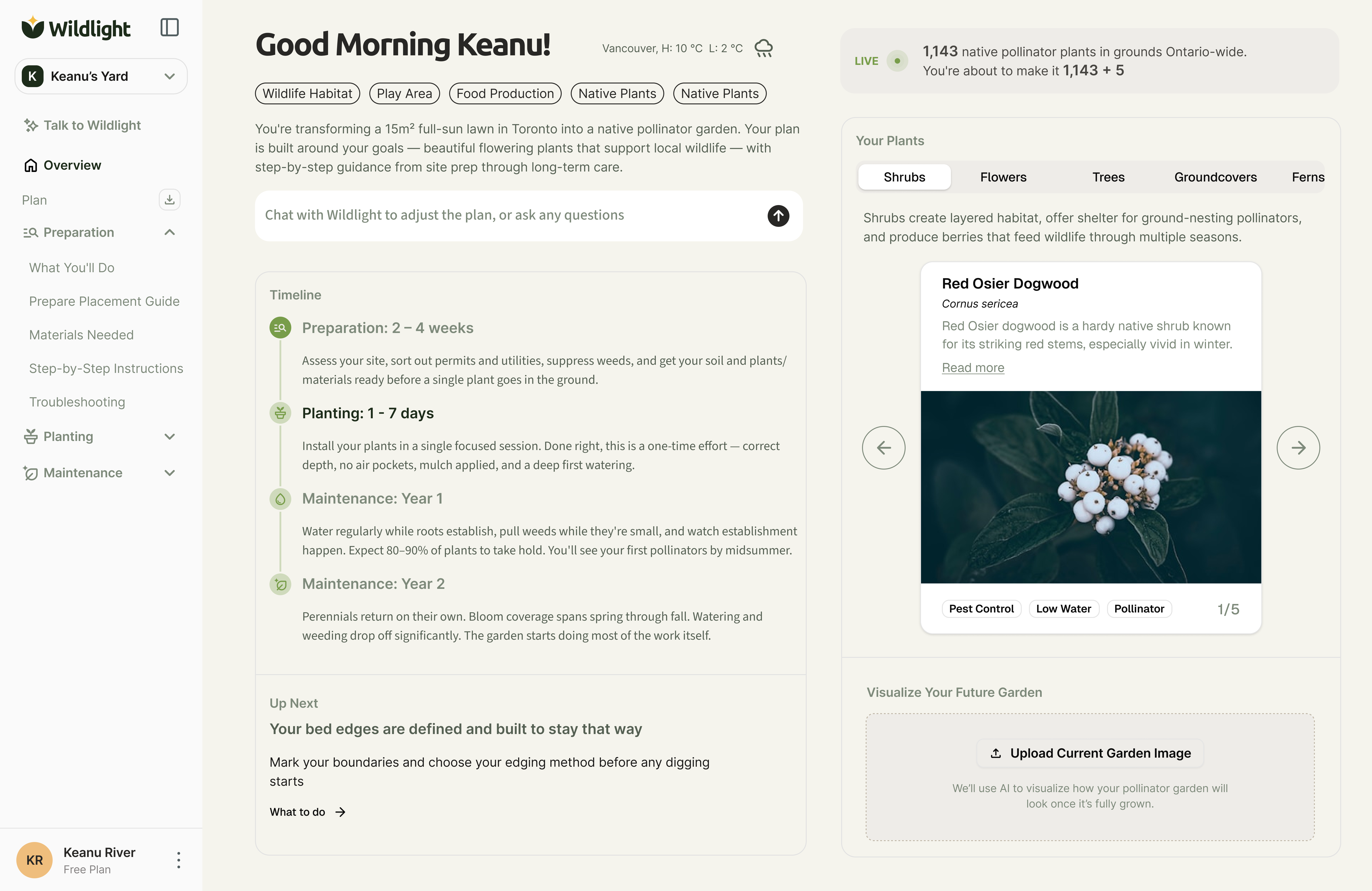
The original brief contained more ideas than the timeline could realistically support. Rather than carrying that risk into development, we defined a launch scope of 6 core features, moved 5 into a structured backlog, and reserved 2 as stretch goals.
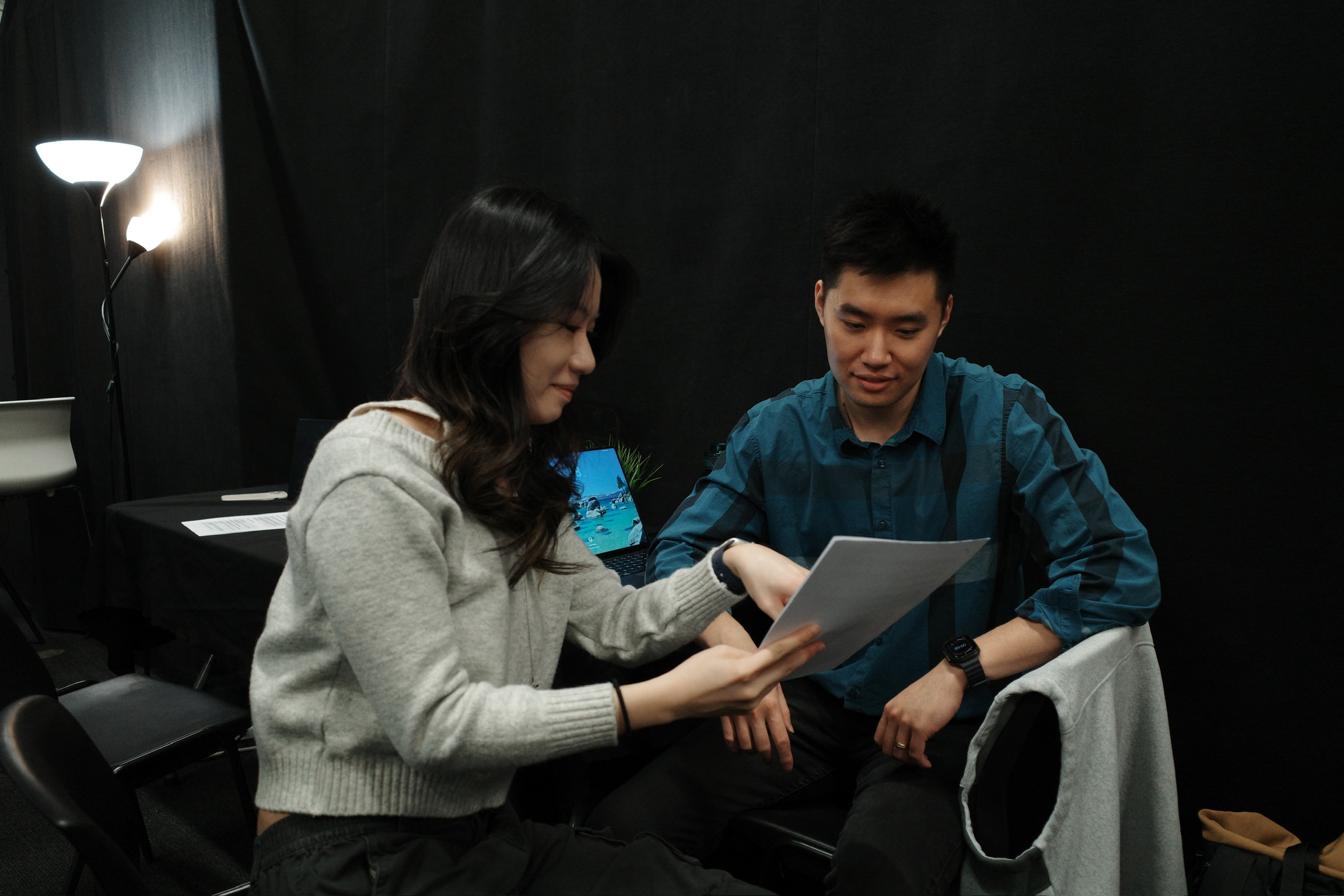
To reduce delivery risk and keep the roadmap honest, we built two usability testing cycles into the development plan as decision gates. With executive alignment secured on this structure, we moved forward with a shared definition of done.
Decision 02
Leading With AI
The original product direction placed AI after the intake. Users completed a static questionnaire about their yard before receiving any guidance. The flow assumed they could accurately describe their yard conditions. It looked like a form, so users treated it like one.
Usability testing, Feb 9, 2026 · n = 20
We restructured the experience around a different assumption, moving the AI to the very first interaction. Instead of a rigid questionnaire, the AI now acts as a conversational guide, helping users assess their yard conditions accurately before generating any recommendations.
Site
Assessment
AI
Exploration
Plan
Suggestions
Export
Plan
The new flow eliminated blind guessing and provided the RAG engine with the exact site data needed to succeed. Users who engaged with it rated the interaction 4.5 out of 5 on naturalness.
Decision 03
From Plan to Action
Generating a plan does not mean the questions stop. Users reached the final page facing questions about unfamiliar plant species, maintenance requirements, and next steps.
In usability testing, users who engaged with the AI chat rated it most valuable, but it ranked last in discoverability of any feature on the plan page.
Usability testing, March 10, 2026 · n = 20
We had spent weeks building an AI assistant users valued, only to discover most of them never found it. The product treated plan generation as the end of the journey, even though users needed the most support after receiving their plan.
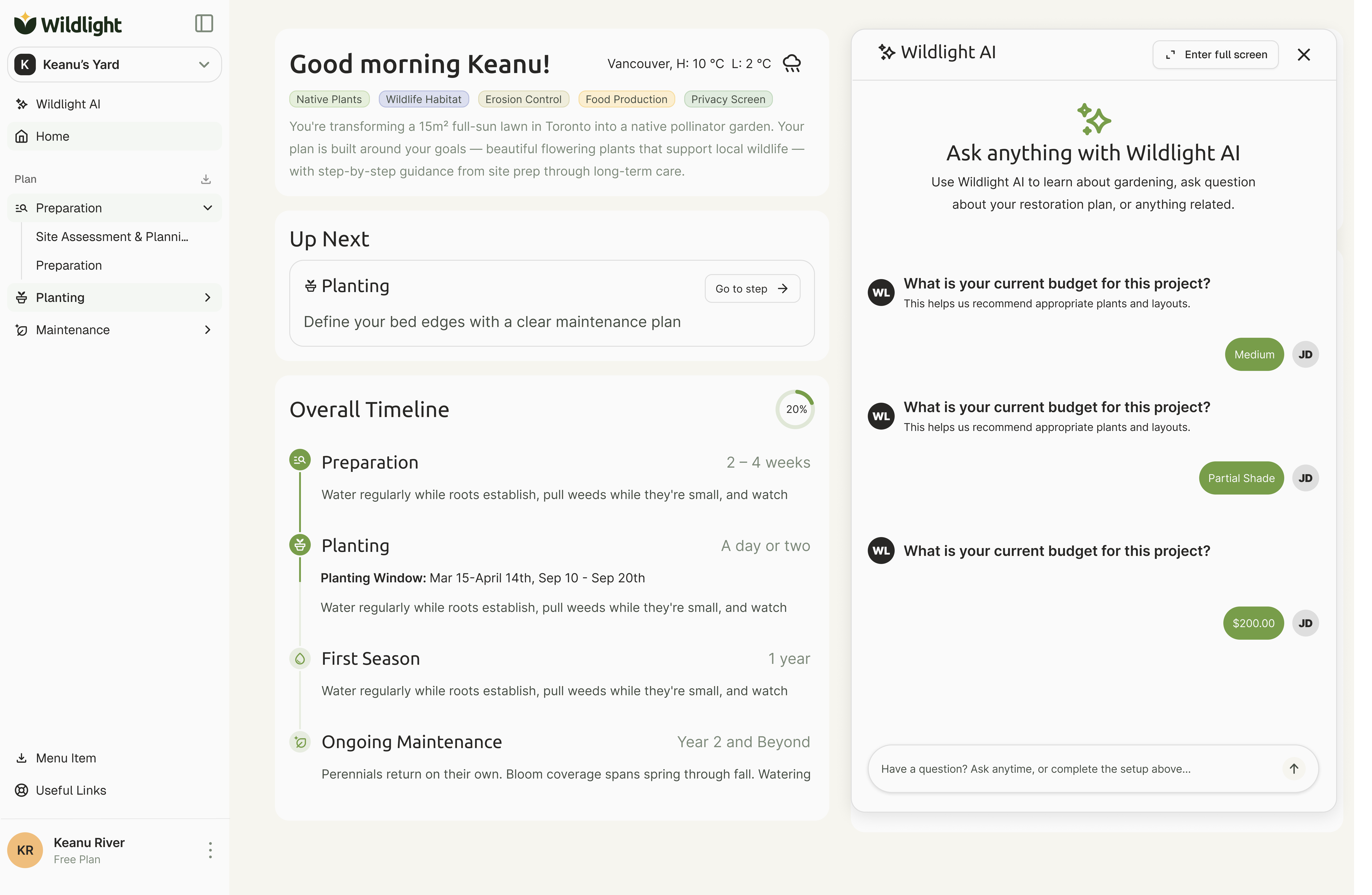
After aligning the team on what that gap was costing us, we embedded the AI chat directly into the plan experience. Users no longer had to leave their plan to get help, creating a continuous path from site assessment to implementation.
The Outcome
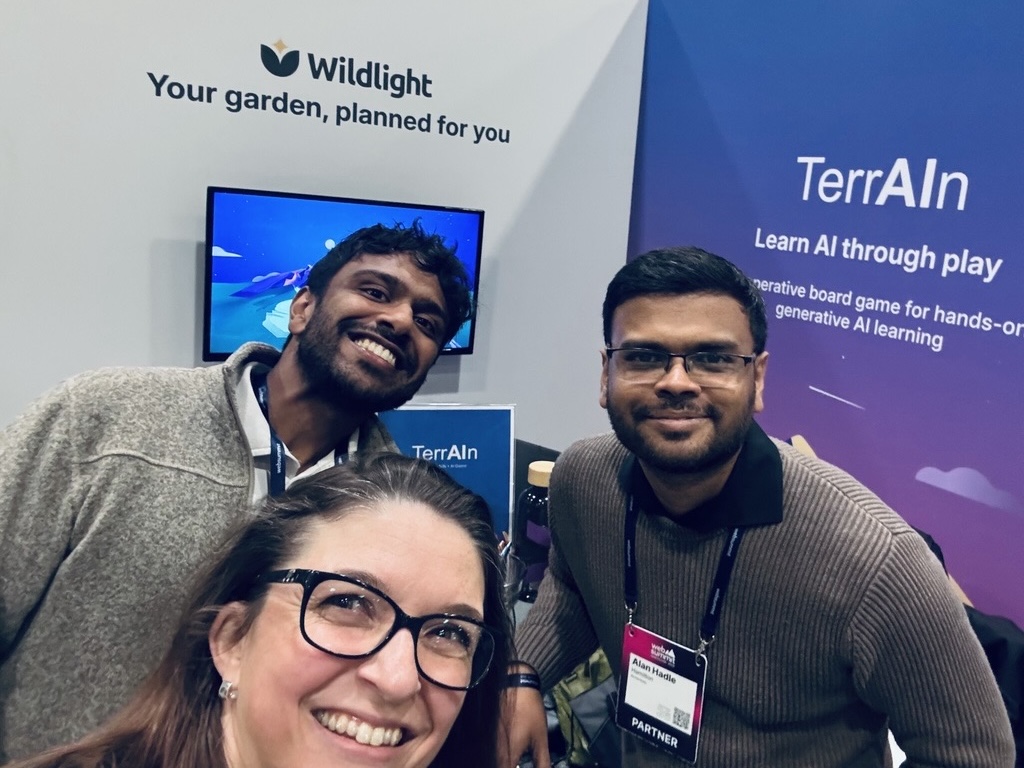
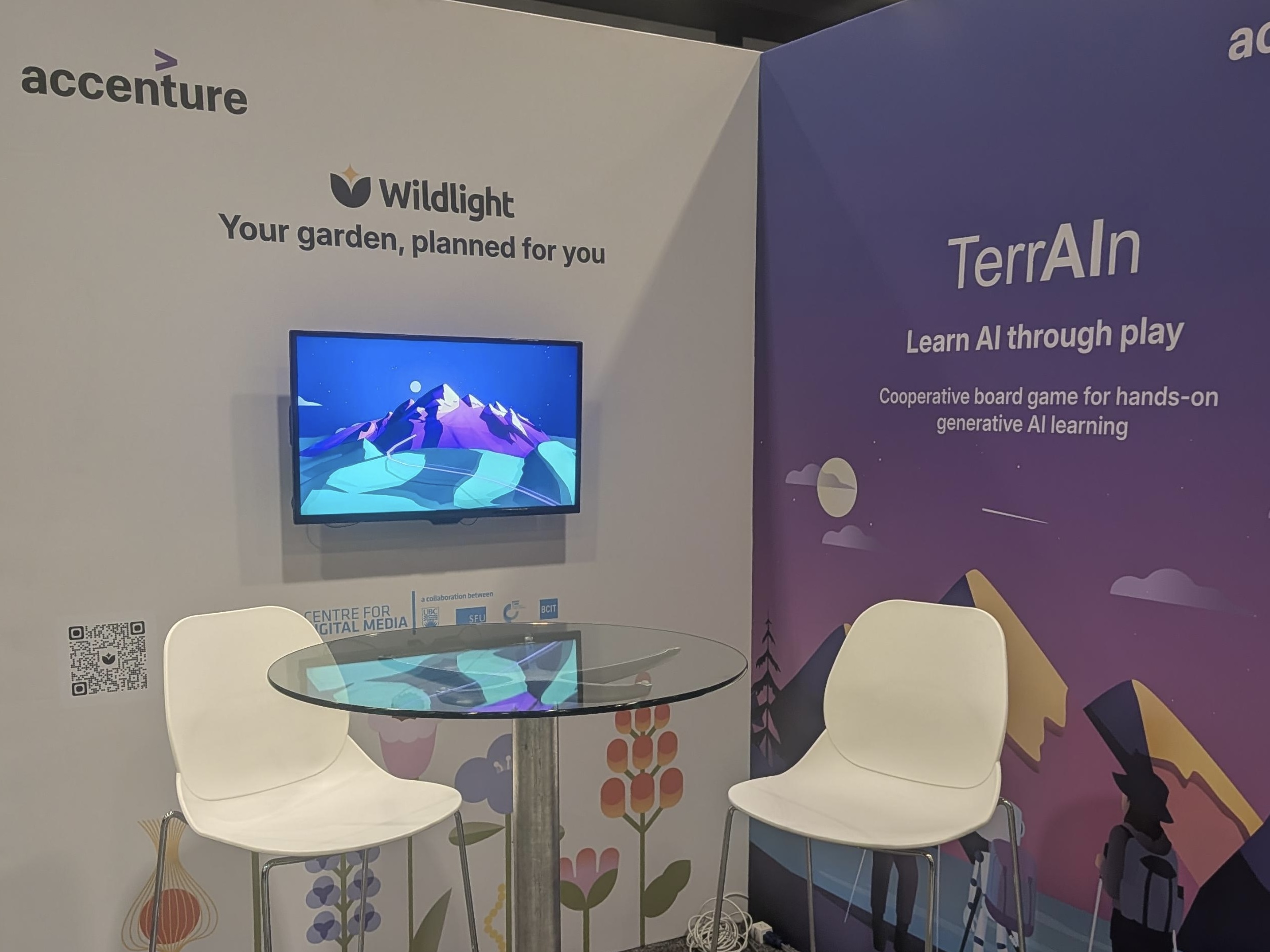
Our team delivered 6 core features and 2 stretch features within a 4-month development cycle. Following its initial rollout in April 2026, Wildlight was showcased at Web Summit Vancouver in May 2026. You can interact with the live product here.
Reflections
In AI products, intake is the product.
A frictionless UI means nothing if it collects bad data. If users guess their way through questions they don't understand, the AI has nothing reliable to work with. The intake experience determines the quality of everything that comes after.
A deadline is also a scope decision.
Saying yes to a timeline means saying no to scope early and explicitly. Without a shared definition of done, design optimizes for polish while engineering optimizes for completion. Hard boundaries are what keep a team building the same product.
Users won't stop to learn. They'll guess.
If a product requires knowledge users don't have, they won't pause to acquire it. They'll choose the most plausible answer and move on. Products should start where user knowledge ends, not where domain expertise begins.