In the summer of 2023, I joined the Institute of Systems Science at the National University of Singapore, one of Asia's top-ranked institutions, as a Digital Innovation and Design Research Assistant.
Working alongside 4 senior lecturers, I drove curriculum and experience design for 2,000+ working professionals across government, finance, and enterprise, with outputs adopted into all subsequent programme runs.
Problem
Blended learning for working professionals sits in an awkward middle ground. Learners arrive motivated, but generic content and a lack of personalised feedback quickly erode that. Most programmes have no way of knowing when, or why, engagement drops off.
NUS-ISS had experience running online courses, but for students, not professionals. As blended learning expanded to serve working professionals, the team faced a different challenge: designing for learners with fundamentally different goals, constraints, and expectations.
Decision 01
Defining the Audience
Early conversations with learners and programme staff highlighted a different set of needs and expectations. Unlike full-time students, working professionals learn after hours, balance jobs and personal commitments, and expect content they can apply immediately.
Student Learner
- Dedicated study time
- Learning for exams
- Building foundational knowledge
- Single-tasking
Working Professional
- Fitting learning around a full-time job
- Learning to apply immediately
- Bringing years of industry experience
- Constantly context-switching
Defining the audience first gave the team a clearer framework for every decision that followed, from content design to feedback measurement.
Decision 02
Designing for Busy Learners
Blended learning shifts more responsibility from instructors to content. If the content fails to engage, there is no instructor in the room to recover attention.
Working professionals preferred content that was visual and concise, and flagged long-form reading as a barrier to completing modules.
Learner survey · NUS-ISS blended learning · n = 200+
Coursera, Drivers of Quality in Online Learning (2020)
These findings shifted our focus from producing more content to making content easier to consume. We introduced a mix of videos, visual references, and interactive exercises that working professionals could fit around a full schedule and apply immediately.
Translated UX concepts into short, workplace-focused learning videos.
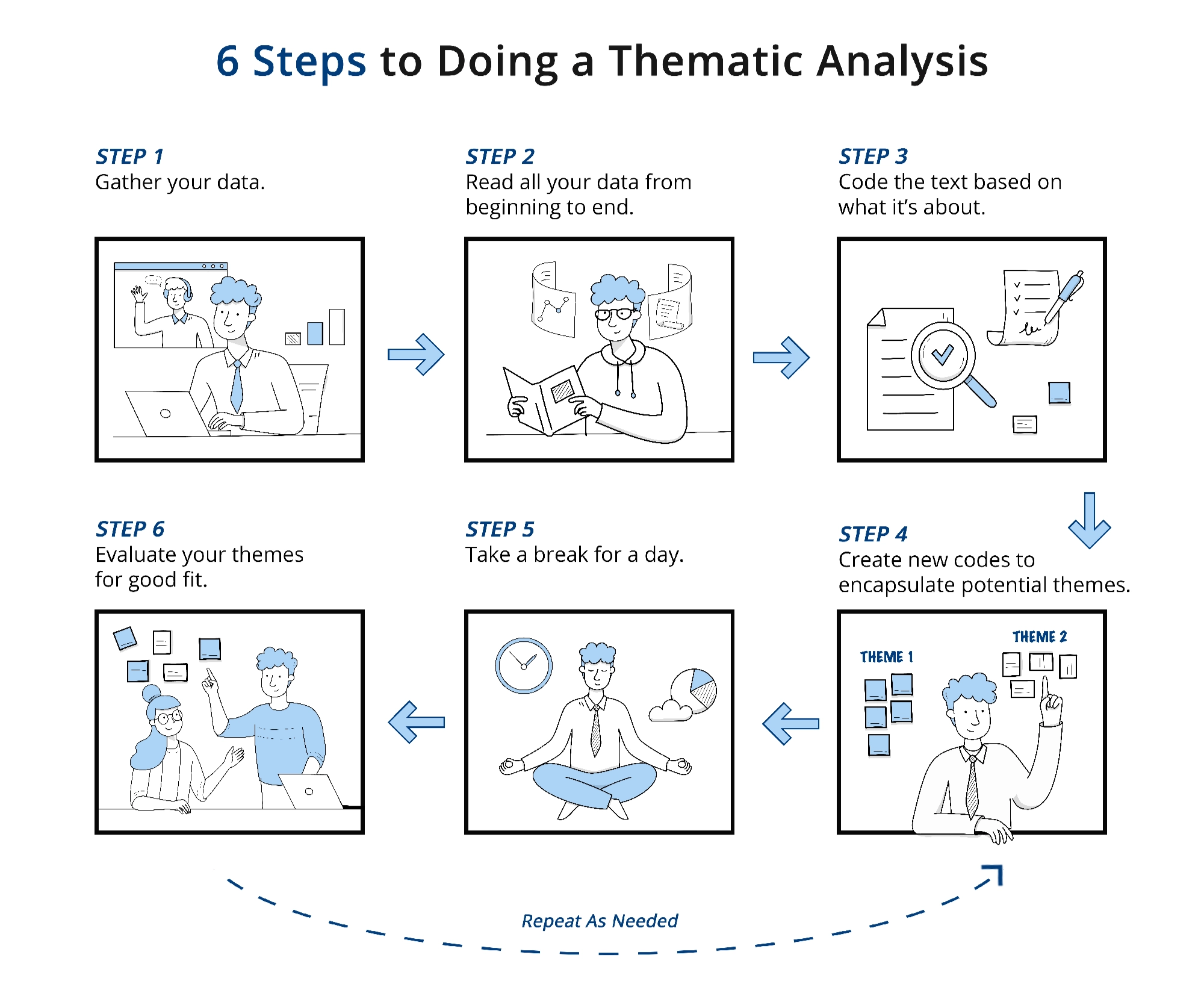
Designed a step-by-step infographic that turned thematic analysis into a quick-reference visual for review after class.
The framework was adopted across subsequent programme runs and later reached more than 2,000 learners across NUS-ISS’s blended learning portfolio.
Decision 03
From Feedback to Action
After each session, learners completed surveys, but the feedback rarely informed future decisions. Programme staff reviewed responses manually, and instructors often relied on individual observations rather than aggregated learner feedback.
The problem wasn't a lack of feedback. It was that the feedback was invisible.
We consolidated survey responses into a single dashboard that surfaced trends across cohorts, making it easier for instructors and programme staff to identify patterns that were previously buried across hundreds of individual survey responses.
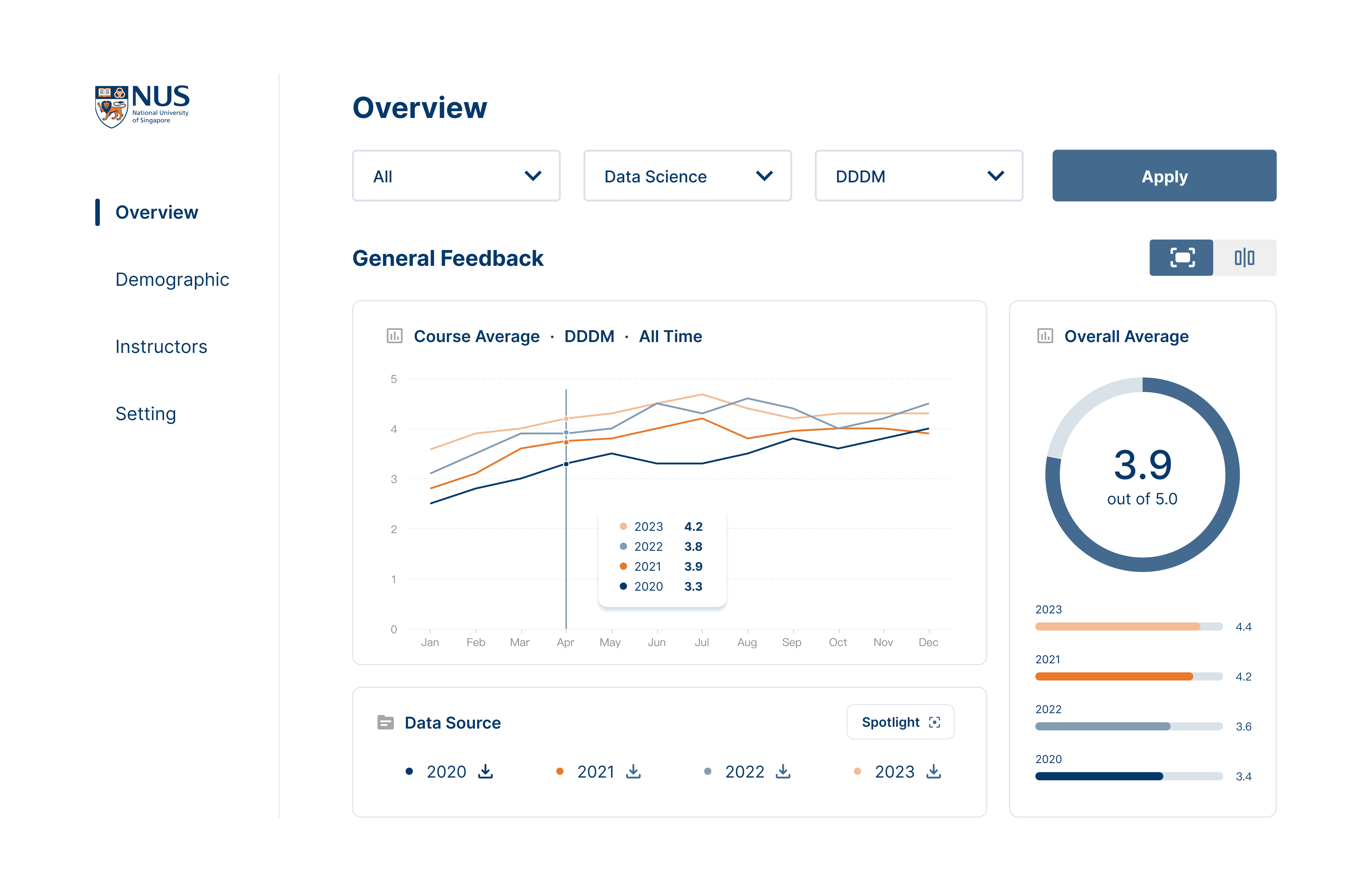
Staff could filter feedback across programmes and years, track certification trends, and monitor overall satisfaction without manually consolidating survey data.
By making learner feedback visible and actionable, the dashboard reduced reporting time by 50% and saved 100+ staff hours annually.
The Outcome
Across one summer, the team redesigned how blended learning content was delivered, evaluated, and improved across NUS-ISS programmes. The outputs were adopted across subsequent programme runs and became part of how NUS-ISS delivered professional education.

Reflections
Not Every Problem Needs a New Feature
Many of the challenges in this project weren't caused by missing features or missing content. The biggest opportunities came from improving how existing systems worked together more effectively over time in practice.
Data Doesn't Drive Decisions
The feedback already existed. The challenge was making it visible enough for teams to use. That experience changed how I think about analytics, reporting, and decision-making systems in everyday practice and team settings.
The Wrong Benchmark
Success became easier to define once we stopped comparing professional learners to students. The challenge was never how to move classroom content online. It was understanding that the audience, expectations, and measures of success had fundamentally changed.